5 Works by Matisse to See in Chicago This Spring
Are you a lover of Matisse’s work? You cannot miss the new exhibition Matisse’s Jazz: Rhythms in Color at the Art Institute of Chicago! The show...
Aniela Rybak-Vaganay 23 March 2026
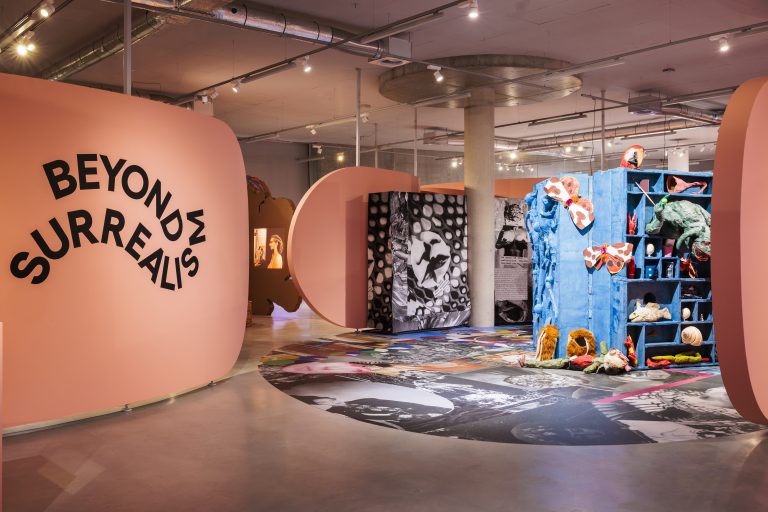
Exhibition view of Beyond Surrealism, Depot of Museum Boijmans Van Beuningen, Rotterdam, Netherlands. Photograph by Natascha Libbert. Press materials.
More than a historical avant-garde, Surrealism continues to function as a living language, one capable of addressing uncertainty, desire, and transformation across time. Beyond Surrealism at Museum Boijmans Van Beuningen in Rotterdam traces this enduring legacy through the work of six contemporary artists.
For over a century, Surrealism has been one of the leading forces in modern and contemporary art. Very few art movements have had the same impact, both on artists and on the general public, and have reached the same recognition. Nowadays, everyone knows the melting clocks by Salvador Dalí or René Magritte’s pipe. And there is no doubt that the public is still highly fascinated by this movement, its quirks and inventions, whether it is solace we look for in art, amusement, or an imaginary world where we can lose (or find) ourselves.
Several artists are still engaging with Surrealism today, drawing upon its lessons and techniques, themes, or jests. In this spirit, Museum Boijmans Van Beuningen just launched an exhibition that aims to highlight the transformative influence of Surrealism and its grip on today’s creators by pairing six contemporary artists with works from its world-renowned and unique collection.
Each artist in the exhibition was asked to select works from the museum’s collection and use them as a starting point for a dialogue with their own work and practice. The result is a fascinating trip into what Surrealism is today and what it represents for contemporary art, what lessons we are still bringing forward, and how it still strikes our imagination.
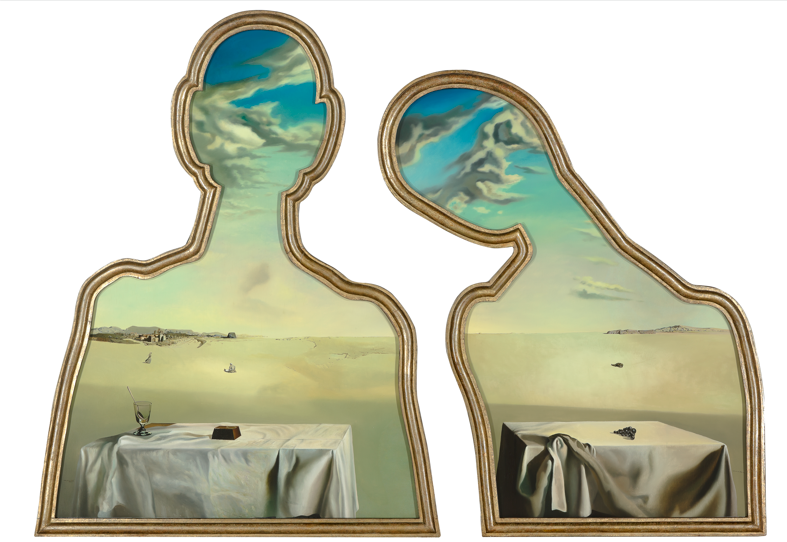
Salvador Dalí, Couple aux têtes pleines de nuages, 1936, Museum Boijmans Van Beuningen, Rotterdam, Netherlands. Purchase with support from Stichting Museum Boijmans Van Beuningen, Vereniging Rembrandt, Cultuurfonds, Erasmusstichting, Stichting Bevordering van Volkskracht / Photograph by Studio Tromp © Salvador Dalí, Fundació Gala-Salvador Dalí, c/o Pictoright Amsterdam 2025.
Open until April 6th, 2026, Beyond Surrealism is hosted in the Depot of the Museum Boijmans Van Beuningen, in Rotterdam. The exhibition features works by contemporary masters, some of which were specifically produced for the exhibition and are site-specific, and aims to create a dialogue with Surrealist works from the museum’s collection.
This visually striking exhibition is not only a tribute to Surrealism in its historical form, but a powerful tool to demonstrate how this movement is still relevant today, despite it being over 100 years since the publication of its Manifesto in 1924. As Saskia van Kampen-Prein, Curator of Modern and Contemporary Art at Museum Boijmans Van Beuningen, explains:
In the uncertain and volatile times we live in, the imaginative power of Surrealism and the desire for alternative realities continue to inspire many contemporary artists, even those who do not identify as Surrealists. These six artists use imagination to address pressing contemporary themes and social issues such as gender, identity, feminism, and climate change, offering new perspectives in a complex world dominated by news of natural disasters, war, and inequality.
The exhibition is therefore a powerful experience that can teach visitors how to apply the lessons of Surrealism to our everyday lives, finding inspiration, amusement, and embracing the restorative power of imagination.
Spanning installation, painting, performance, sound, and moving image, the artists featured in Beyond Surrealism revisit the movement’s core strategies—including dream logic, transformation, humor, and the disruption of rational meaning—through urgent contemporary lenses. Together, these practices extend Surrealism beyond historical reference, positioning it as a living method for navigating ecological, psychological, and social complexities today.
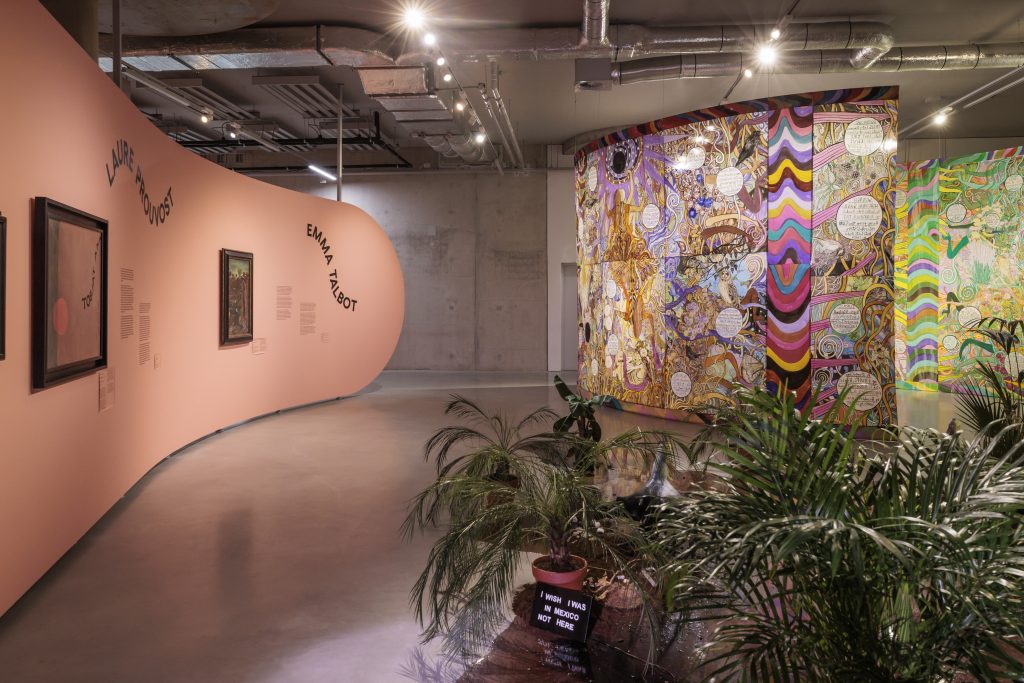
Work by Emma Talbot, exhibition view of Beyond Surrealism, Depot of Museum Boijmans Van Beuningen, Rotterdam, Netherlands. Photograph by Natascha Libbert. Press materials.
Laure Prouvost uses language as a powerful tool to spark imagination and challenge fixed meanings, opening a playful and poetic dialogue between word and image, much like a modern René Magritte. The artist plays with urgent themes such as nature and climate. For Beyond Surrealism, she presents an installation where “talking” plants and oversized fish reflect on their conditions and threats, building a surreal ecosystem where language, image, and ecology converge in unexpected ways.
Emma Talbot’s large silk panels are painted with vibrant patterns, flowing lines, and ghost-like figures. For the exhibition, the artist created Magical Garden, Everything in Transformation, inspired by Leonora Carrington’s painting Again, The Gemini Are in the Orchard (1947). Like Carrington, Talbot explores the power of magic in reshaping our relationship with reality. Her installation presents a garden in light and shadow, depicting the cycle of life and emphasizing our place within the ecological system.
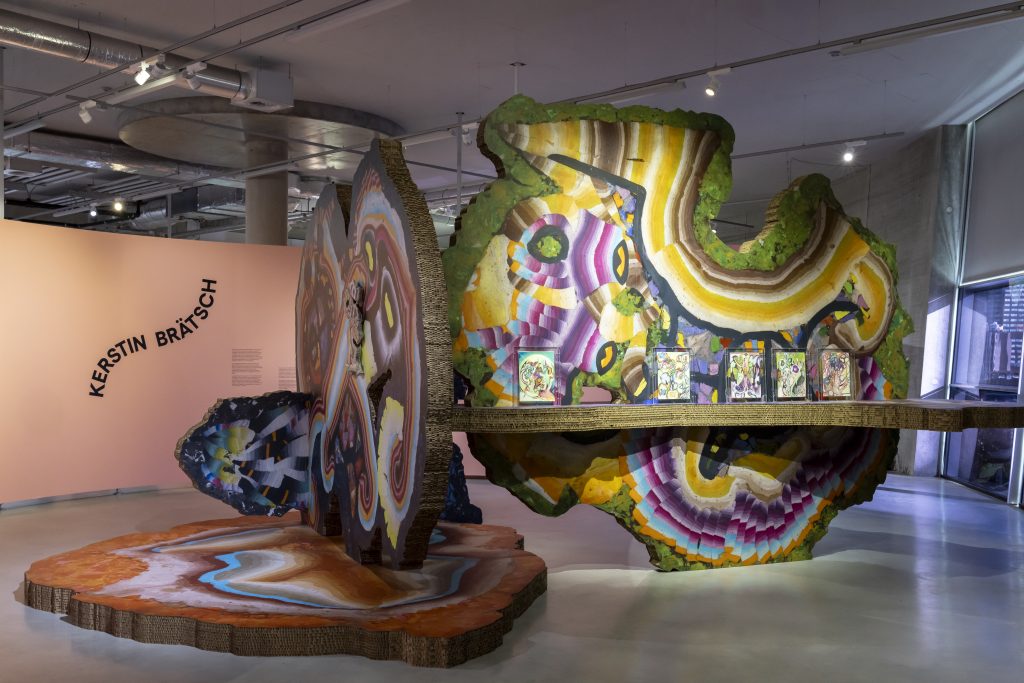
Work by Kerstin Brätsch, exhibition view of Beyond Surrealism, Depot of Museum Boijmans Van Beuningen, Rotterdam, Netherlands. Photograph by Natascha Libbert. Press materials.
In her series Para Psychics (2020–2022), Kerstin Brätsch moves beyond the traditional canvas and transforms predictions from palm readers and clairvoyants into semi-abstract paintings. Drawing upon the idea of spirit and inner consciousness, she confronts Francis Picabia’s Viens avec moi là-bas (1948) for its relation to consciousness, as well as Paysage avec nuages roses (1928) by Yves Tanguy. In doing so, she produces monumental, marbled works on paper, with their enigmatic titles and accompanying meditative soundscapes.
Monster Chetwynd created a large-scale walkable floor collage, echoing Max Ernst’s collage books, where visitors can wander and get absorbed in it. Using humour and absurdity to challenge conventional ideas about gender and social roles, Chetwynd mixes performance, set and costume design, sculpture, and collage to engage in dialogue with iconic Surrealist works such as Dalí’s Mae West Lips Sofa (1938) or the poetic leaflets known as Papillons (1924), once scattered through Paris by the Surrealists.
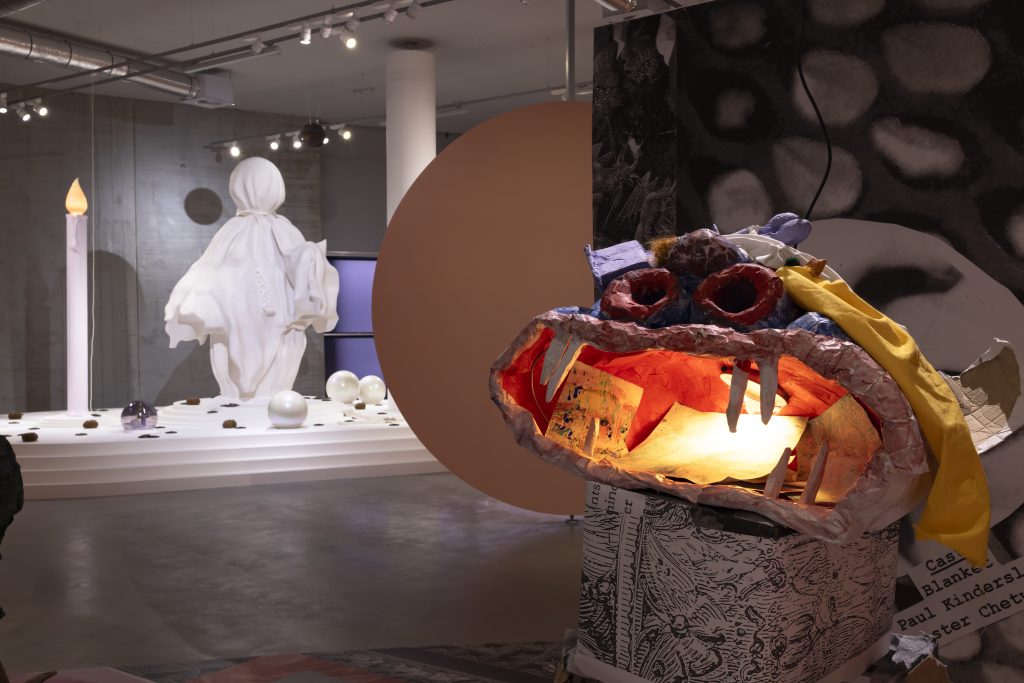
Work by Monster Chetwynd, exhibition view of Beyond Surrealism, Depot of Museum Boijmans Van Beuningen, Rotterdam, Netherlands. Photograph by Natascha Libbert. Press materials.
In her work, Tai Shani explores the hallucinogenic effects of ergot, a fungus found on rye and grains and known as the origin of LSD. From this interest, she develops alternative worlds in which psychoactive substances play a central role. For Beyond Surrealism, she presents a new installation within her ongoing project The Neon Hieroglyph (since 2021): a nocturnal scene in which a ghost floats above an abstract wooden landscape. Shani draws inspiration from Unica Zürn’s Komposition (1955), whose figures are haunted by dreams and fantasies.
Raphaela Vogel investigates how power operates, how deeply rooted it is, and the roles that culture and psychology play in shaping it. Her installations combine film, sound, sculpture, anatomical models, and painted animal hides into spatial collages. In My Appropriation of Her Holy Hollowness (2021–2025), she dismantles and re-examines traditional power structures, reflecting on dominant ideas about gender, humanity and animality, technology, and biology, while establishing a dialogue with Dalí’s Couple aux têtes pleines de nuages (1936) and Shirley Temple, le plus jeune monstre sacré du cinéma de son temps (1939).
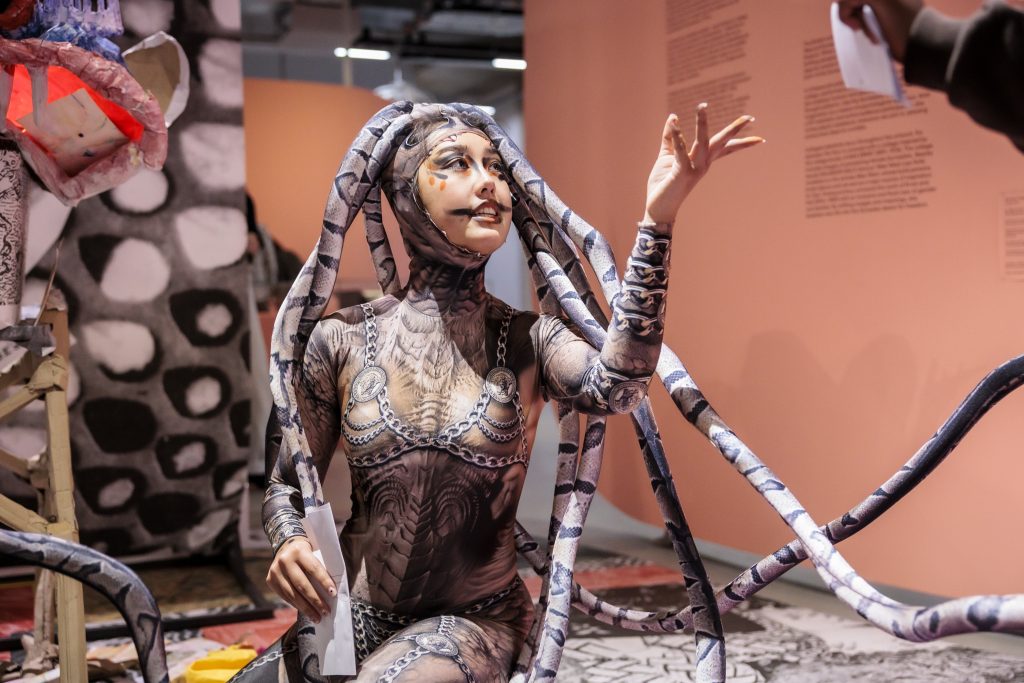
Work by Monster Chetwynd, exhibition view of Beyond Surrealism, Depot of Museum Boijmans Van Beuningen, Rotterdam, Netherlands. Photograph by Natascha Libbert. Press materials.
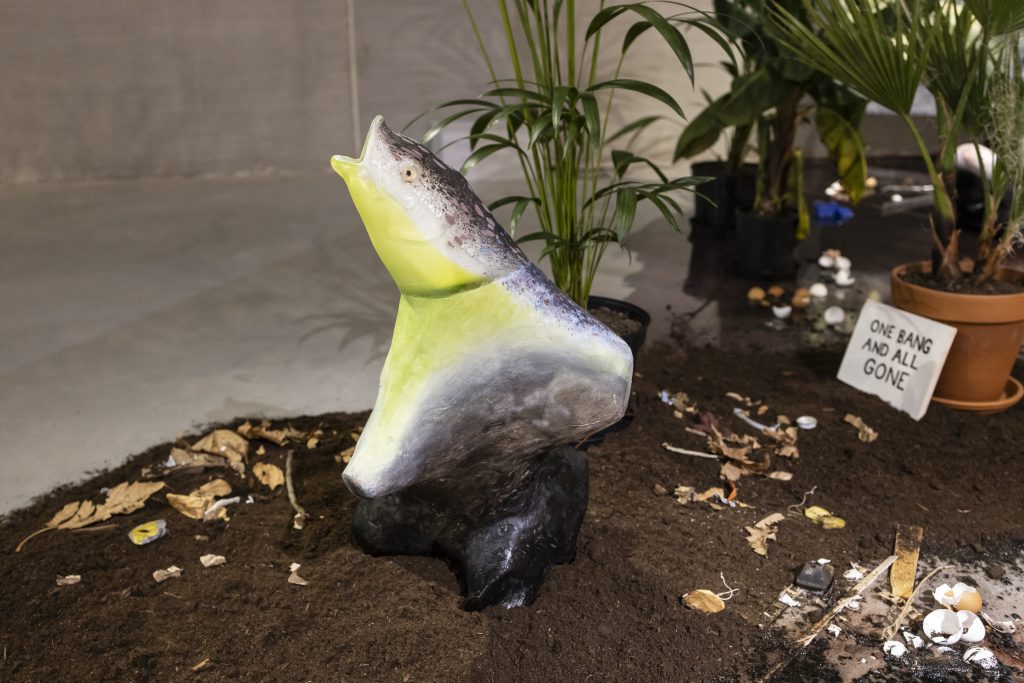
Work by Laure Prouvost, exhibition view of Beyond Surrealism, Depot of Museum Boijmans Van Beuningen, Rotterdam Netherlands. Photograph by Natascha Libbert. Press materials.
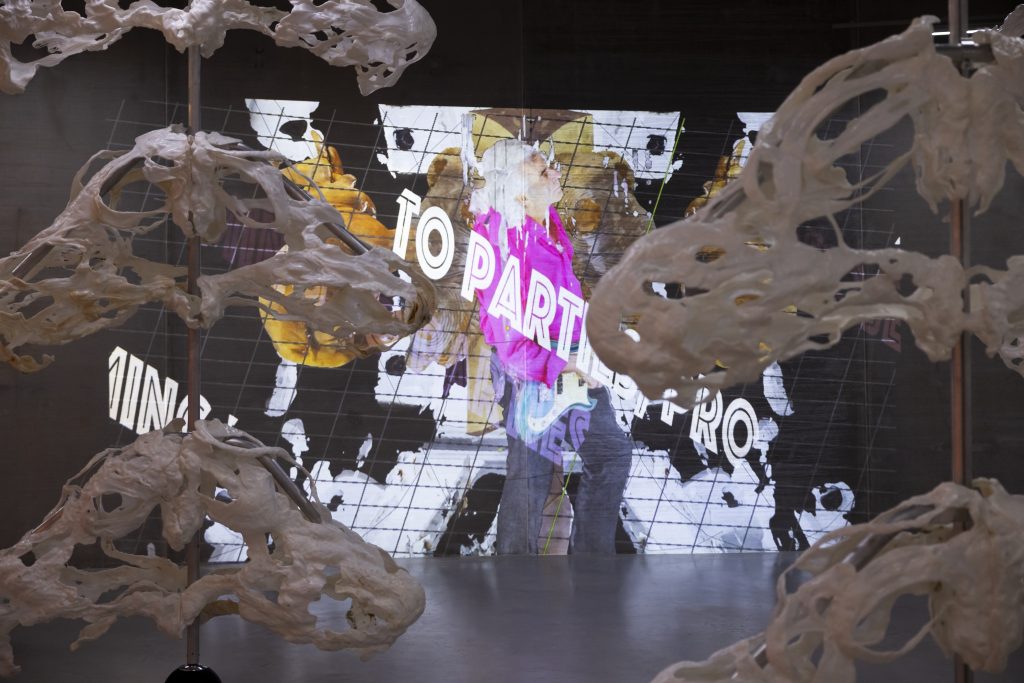
Raphaela Vogel, My Appropriation of Her Holy Hollowness,2021–2025, exhibition view of Beyond Surrealism, Depot of Museum Boijmans Van Beuningen, Rotterdam, Netherlands. Photograph by Natascha Libbert. Press materials.


A detail from the installation by Monster Chetwynd inside the Beyond Surrealism exhibition at Museum Boijmans Van Beuningen.
Laure Prouvost’s fish, part of her work presented inside Beyond Surrealism.
Exhibition view with My Appropriation of Her Holy Hollowness by Raphaela Vogel.
Beyond Surrealism is on view at the Depot of the Museum Boijmans Van Beuningen in Rotterdam, Netherlands, until April 6, 2026.
Get your daily dose of art
Click and follow us on Google News to stay updated all the time

DailyArt Magazine needs your support. Every contribution, however big or small, is very valuable for our future. Thanks to it, we will be able to sustain and grow the Magazine. Thank you for your help!

Carlotta Mazzoli is an independent curator and art advisor, currently based in Europe. Over the past ten years, she has collaborated with private and public institutions and art galleries in Italy, London, New York, and Shanghai. She specializes in public art, environmental and social issues, and the importance of art as a relational medium. In her free time she likes to write about art and travels on Artsy Travels.

Univ. of New Orleans, Fine Arts and History; Fine Artist, Professional Graphic Designer, Art Historian, Historian, Musician, worked at the New Orleans Museum of Art and MS Museum of Art; learning enthusiast!
Are you a lover of Matisse’s work? You cannot miss the new exhibition Matisse’s Jazz: Rhythms in Color at the Art Institute of Chicago! The show...
Aniela Rybak-Vaganay 23 March 2026
A sumptuous new book takes us on a fascinating tour of domestic house cats in art. Taking in over 200 paintings, sculptures, and popular culture images, Cat is a must-read for feline fans!
Candy Bedworth 12 March 2026
Thomas Gainsborough assembled a veritable army of portraits of “the great and the good” in Georgian Britain. And the new exhibition at the Frick...
MJ Rivera 5 March 2026
Strange Beauties is a once in a generation retrospective on Gwen John, one of the most significant painters of the twentieth century.
Candy Bedworth 9 March 2026